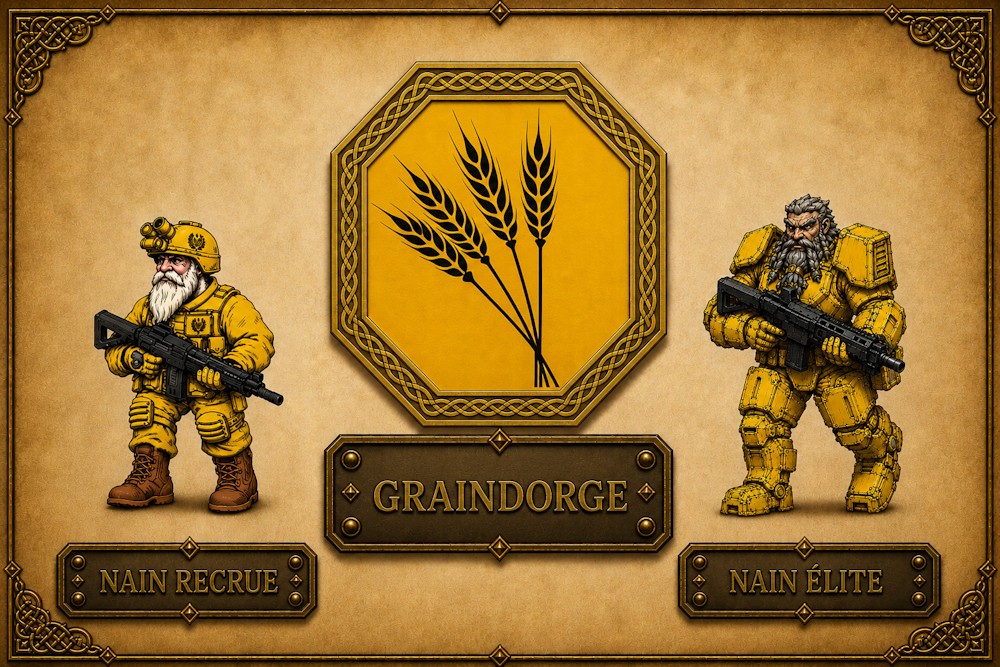
DISCOVER THE GRAINDORGE FAMILY “Grain forged our destiny.” When Griselda inherited the most fertile lands in the...

Latest posts
-
 THE HUGE ARMY OF DWARFS - The family GraindorgeRead more
-
 Gunnar lore - Chaptire 004 - Naissance de Jambe de ferRead more
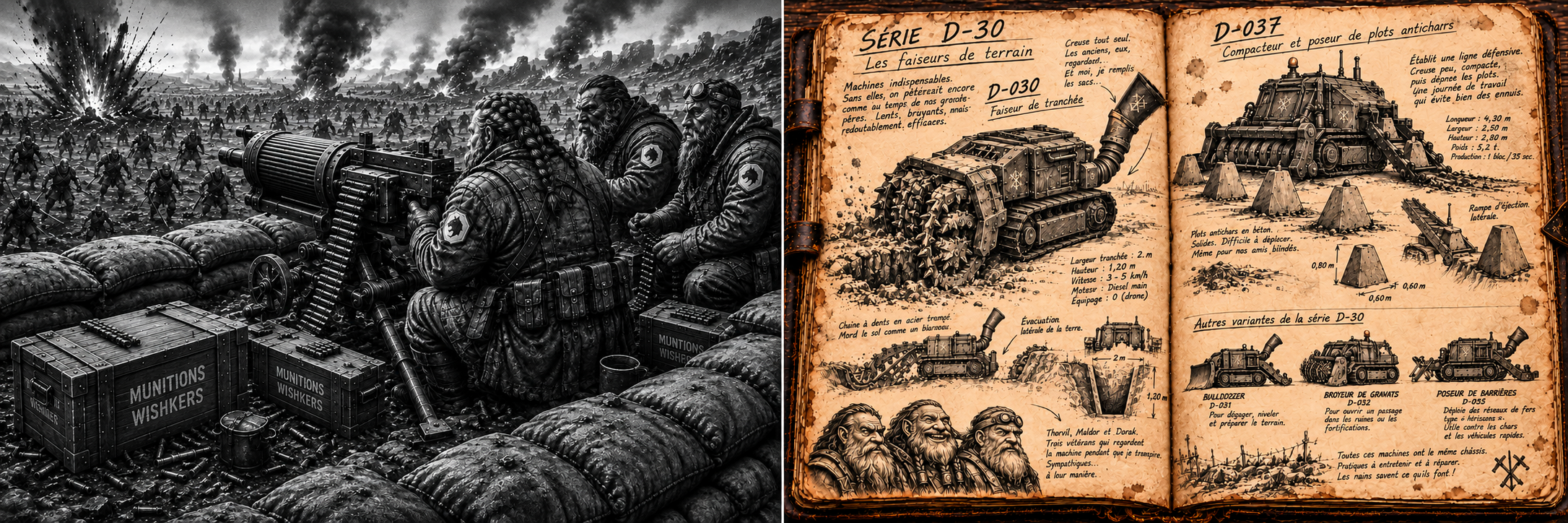
Gunnar's lore - CHAPTER 004 THE BIRTH OF IRON-LEG The War of the North is raging! For Gunnar Fierabras, a young...
-
 THE HUGE ARMY OF DWARF - The Foyer ArdentRead more
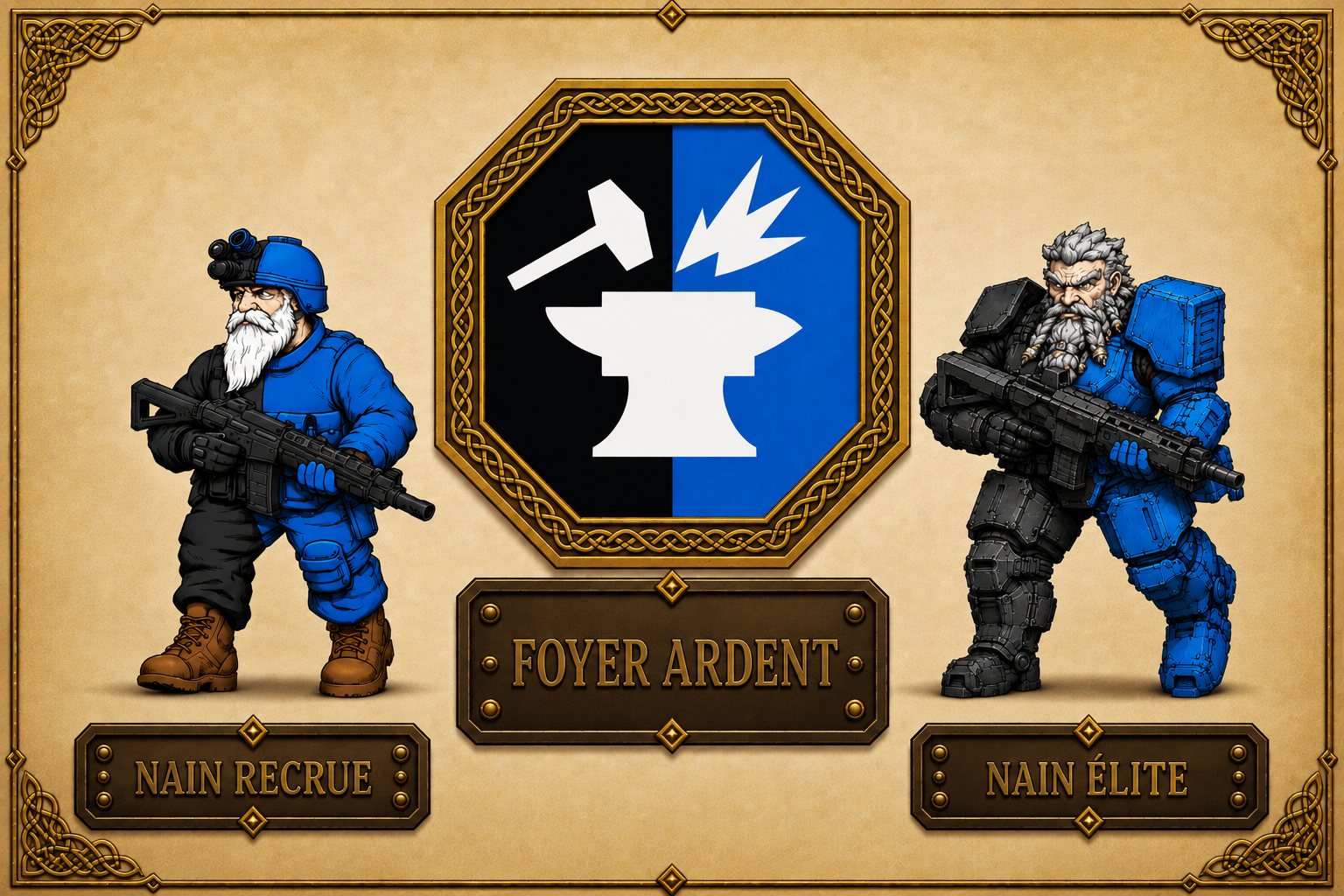
HUGE ARMY OF DWARFS – DISCOVER THE SEVEN FOUNDING FAMILIES Today: The FOYER ARDENT Family! “Fire and hammer make the...
-
 Gunnar's lore - Chapter 3 - First scarRead more
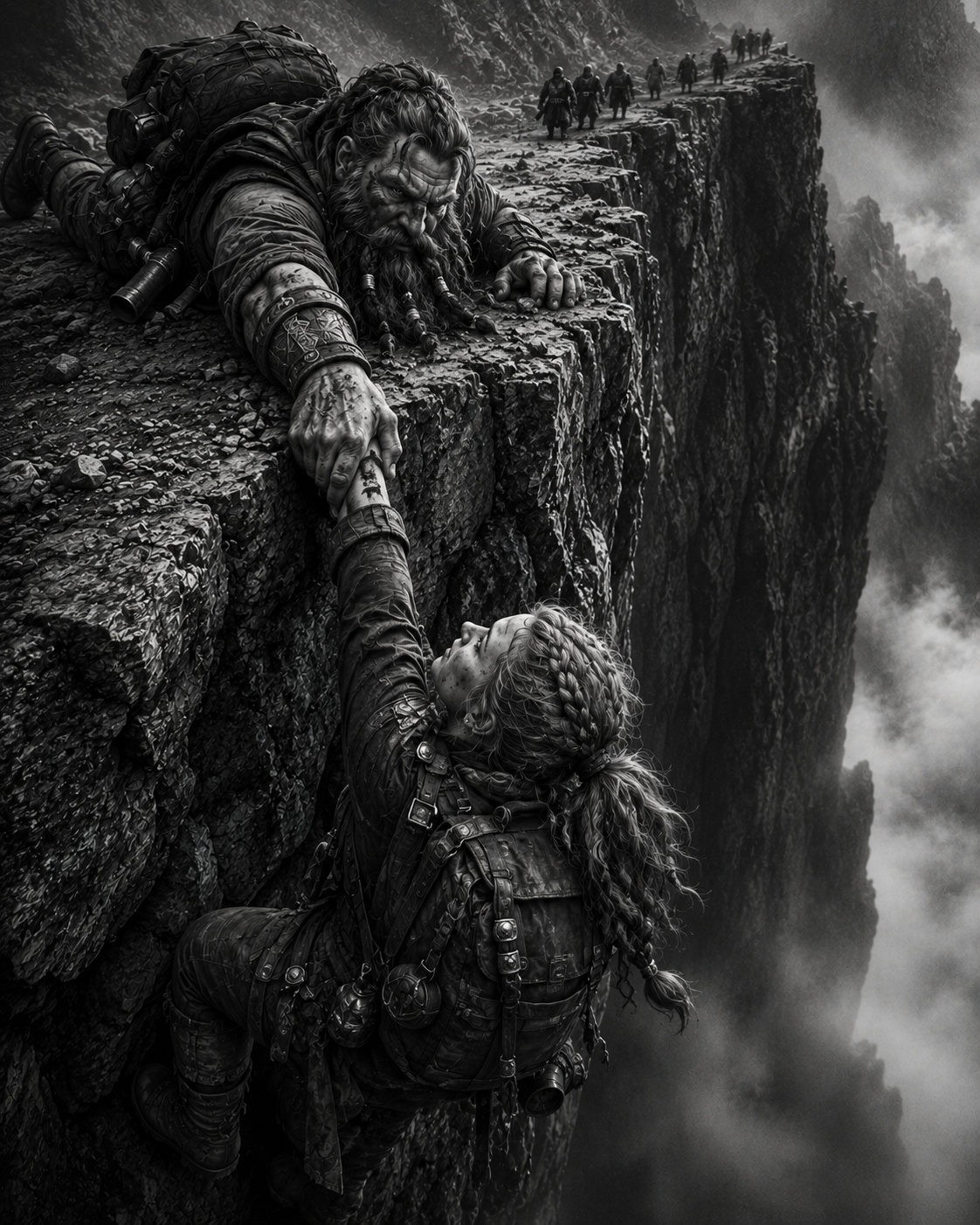
CHAPTER III — FIRST SCAR At one hundred years old, Gunnar Fierabras begins his military training under the legendary...
-
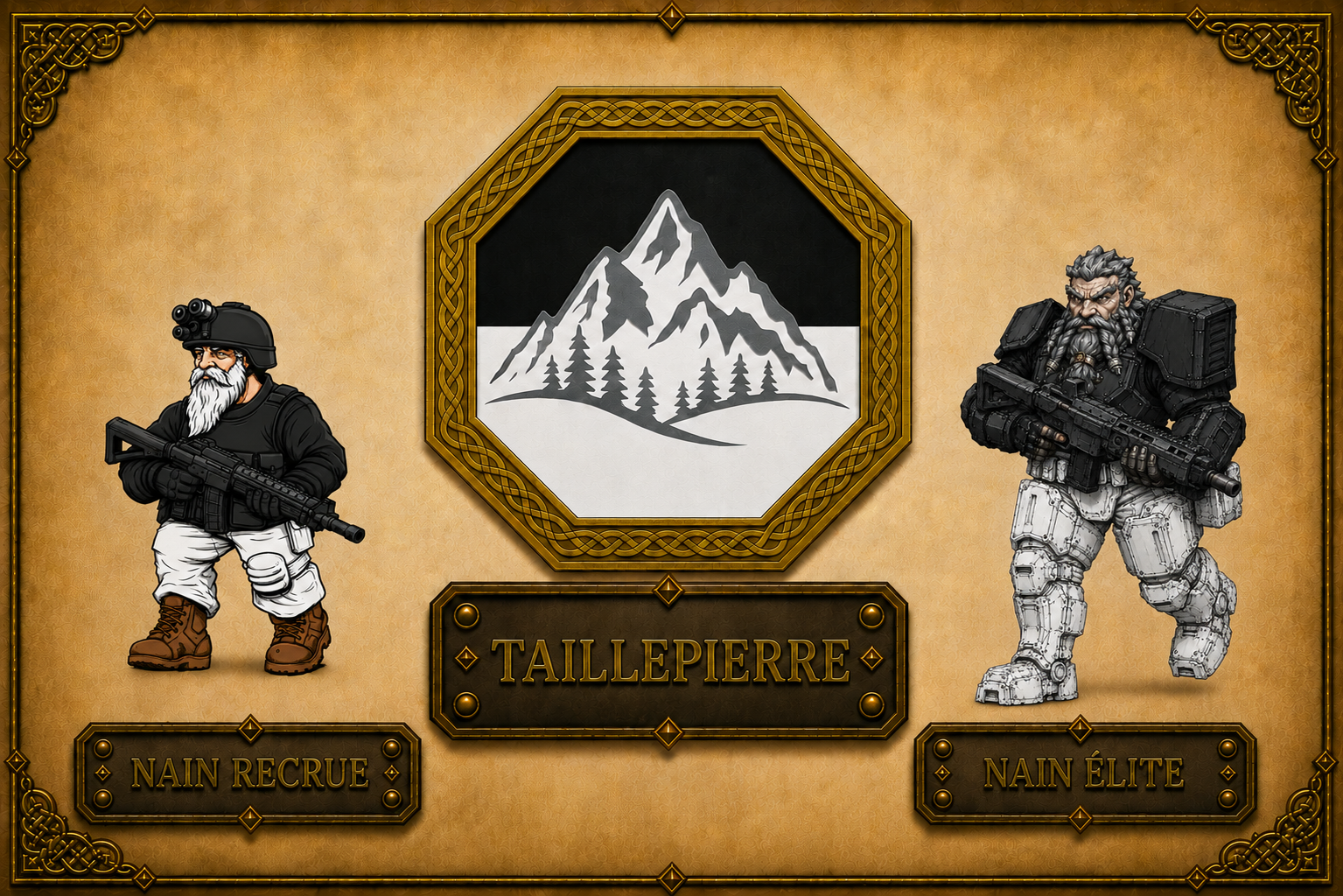 THE HUGER ARMY OF DWARF - Famille TaillepierreRead more
THE TAILLE-PIERRE CLAN Motto: “No Stone Can Resist Us.” Legend has it that their story began when their first ruler,...
-
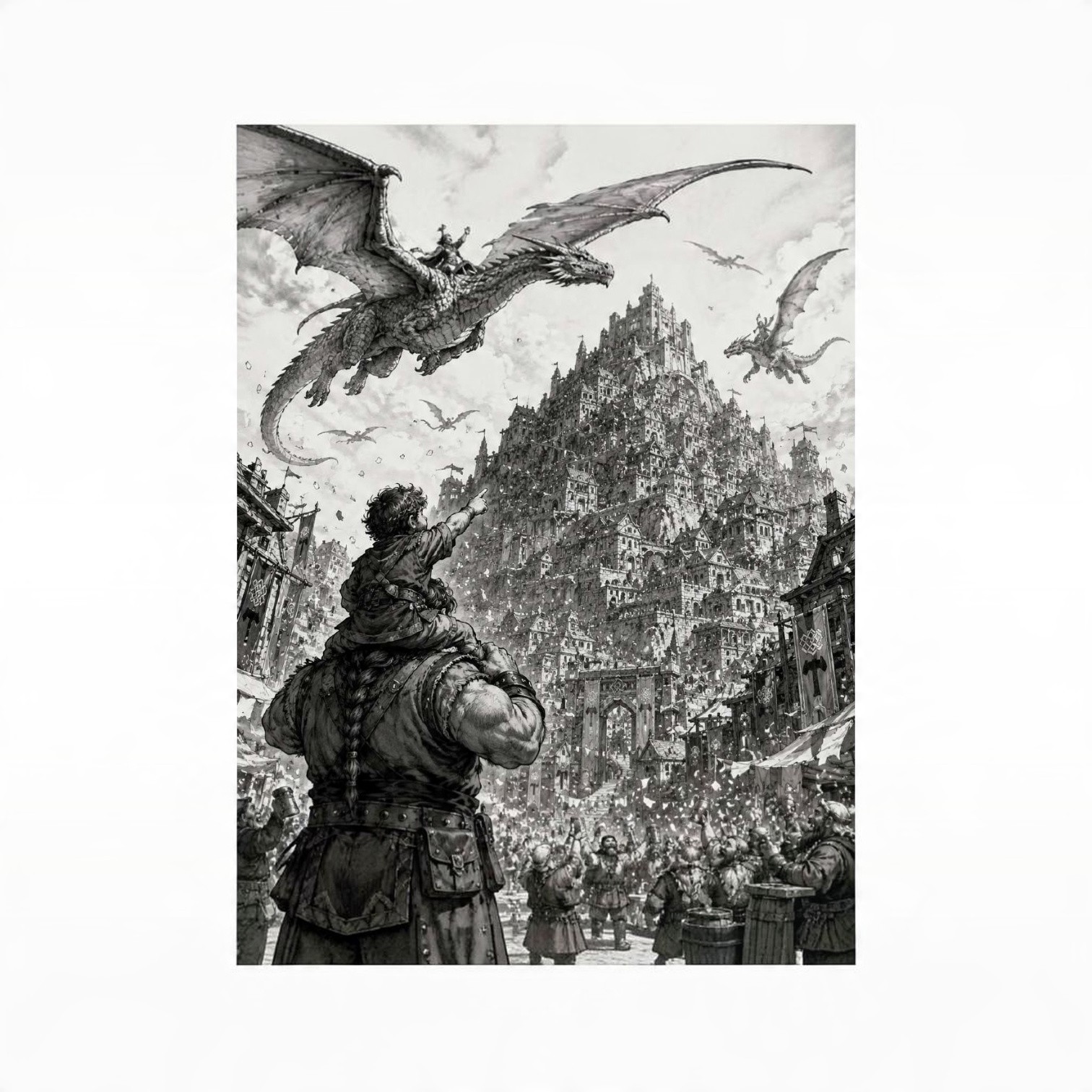 Gunnar's lore - Chapter 2 - A lesson in lifeRead more
A LESSON IN LIFE Long before Gunnar became a seasoned warrior, he was just a young dwarf discovering the wonders of...
-
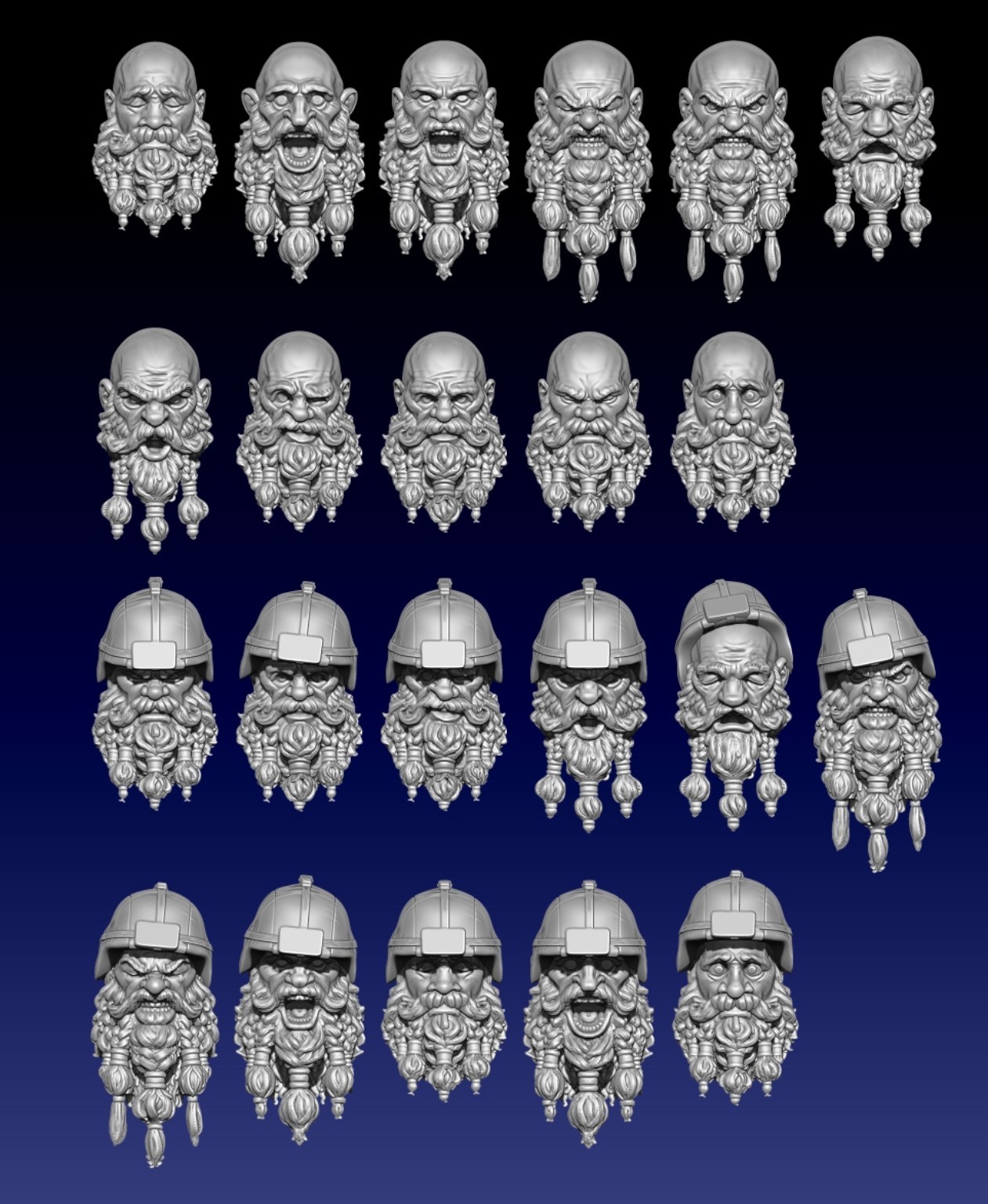 THE UGE ARMY OF DWARF - Projet Montreux 2027Read more
Nous serons présent à la 20ième édition du Montreux Figurines Show, afin de marquer cette évènement, nous allons...
-
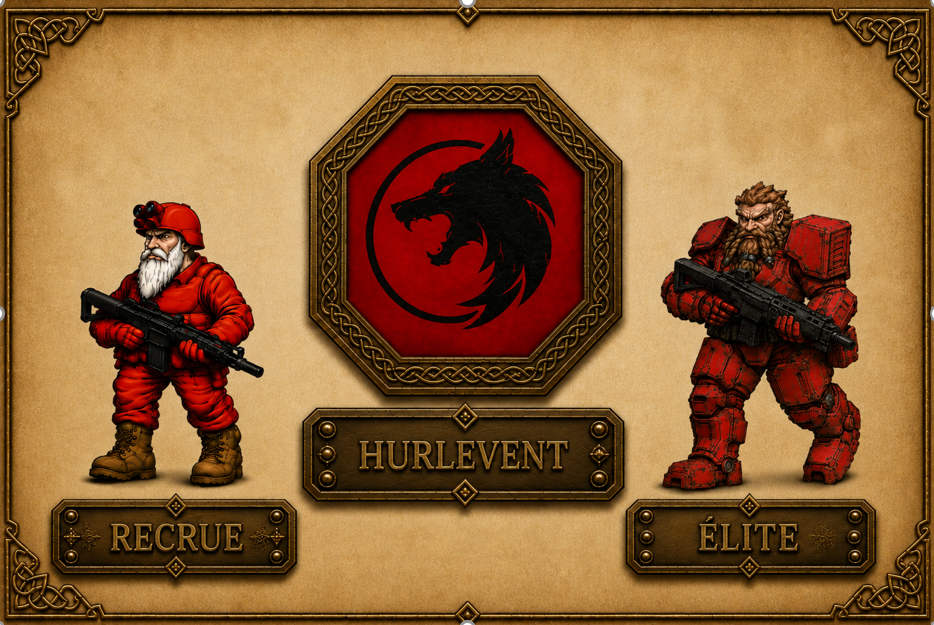 THE HUGE ARMY OF DWARF - Famille HURLEVENTRead more
THE HUGE ARMY OF DWARFS – THE 7 FAMILIES After the Guardians of the Peaks, our journey through the great Dwarf...
-
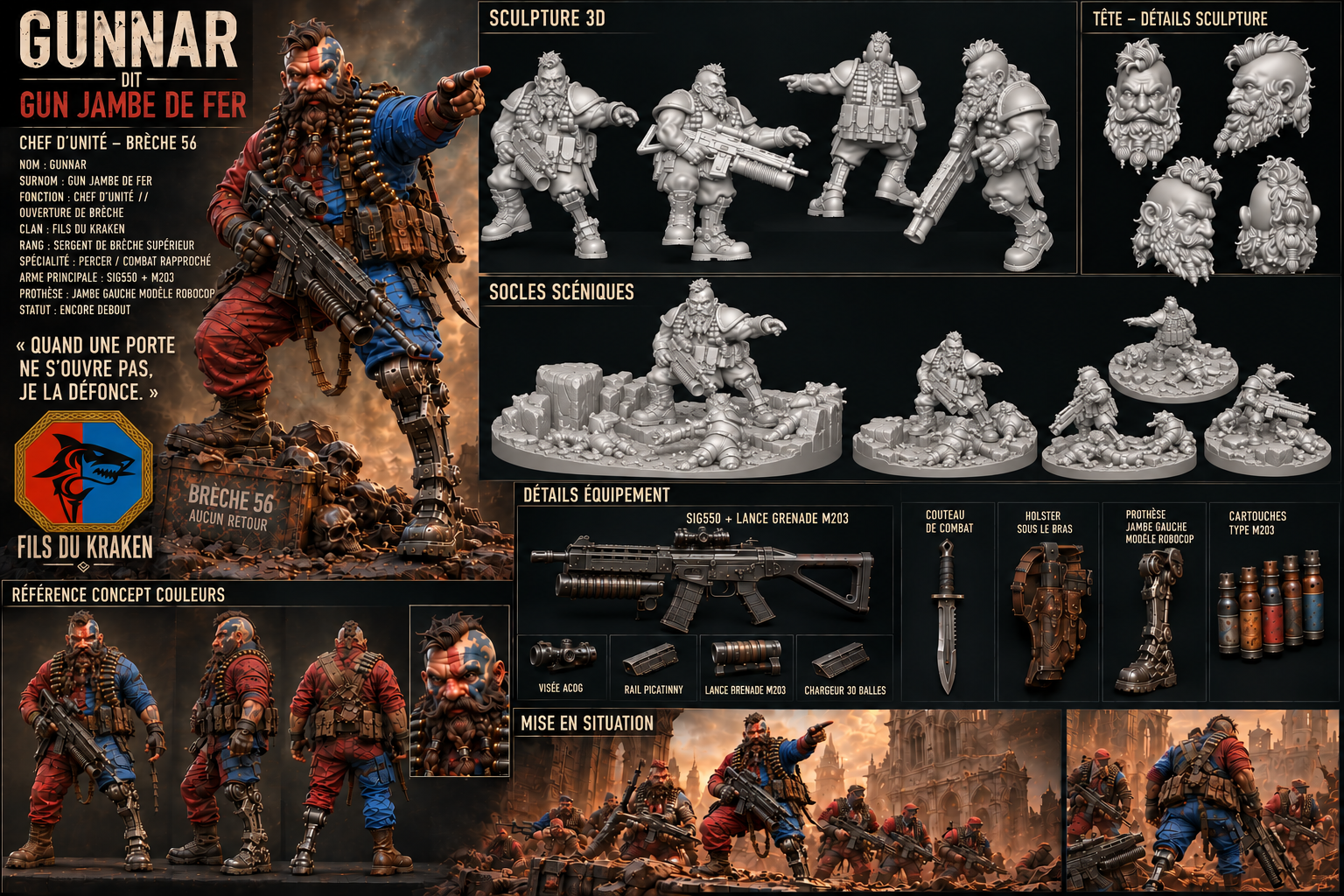 Gunnar Steel Leg collection THE HUGE ARMY OF DWARFRead more
How get birth the figure GUNNAR STEEL LEG, step by step, shape, weapons, this was given to Greg Giraud.
-
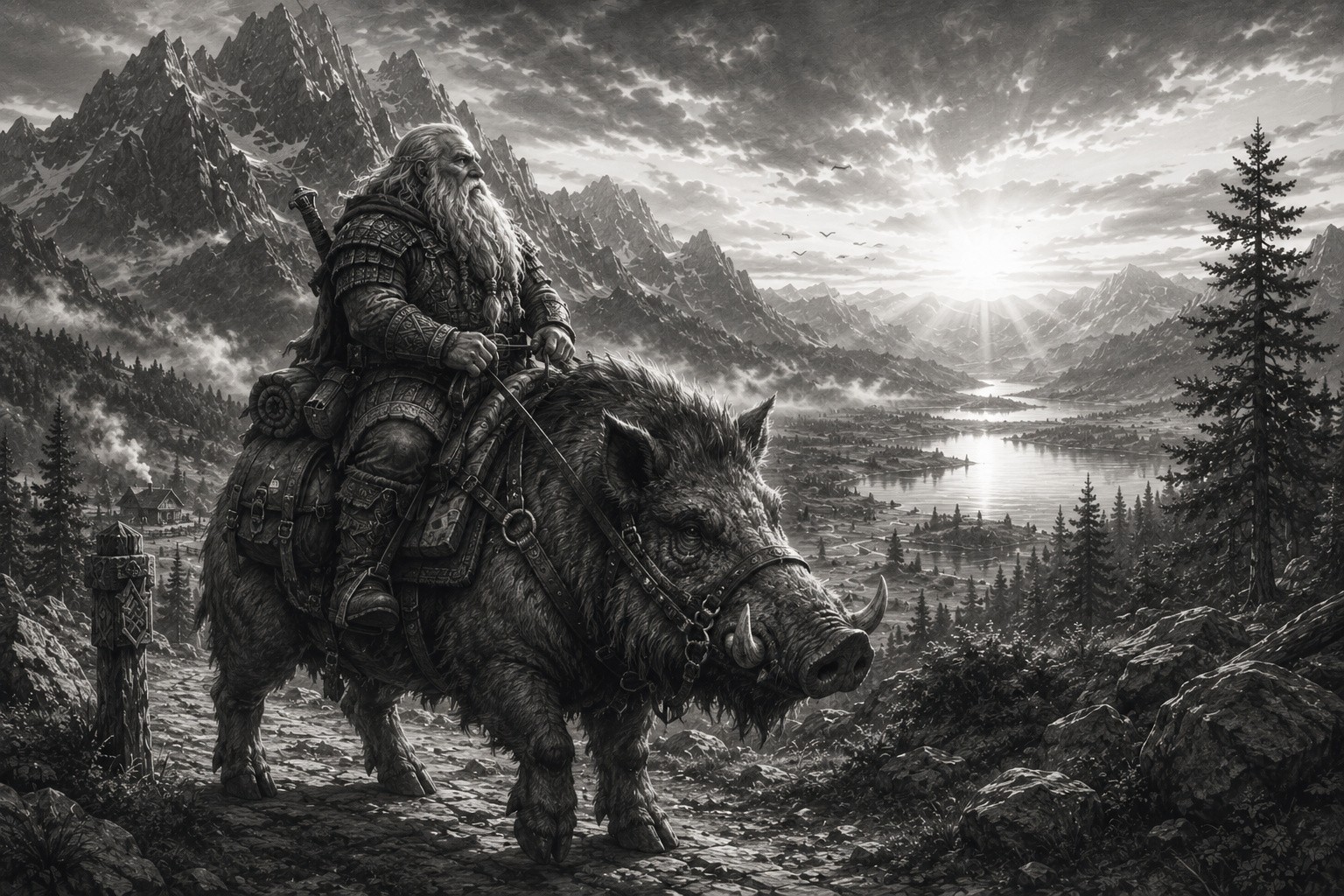 Gunnar's lore - Chapitre 1 - On a beautifull dayRead more
For his 865th birthday, Gunnar sets off with Couenne to enjoy a peaceful day in the heart of the pastures. But...
Blog categories
Search in blog
Archived posts
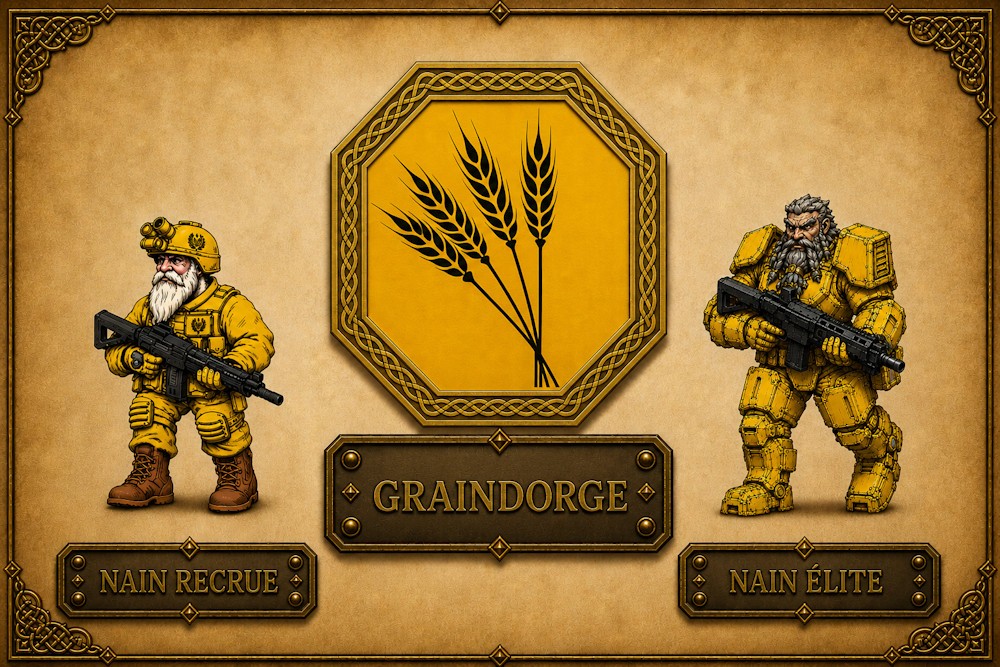
THE HUGE ARMY OF DWARFS - The family Graindorge
Motto
“Grain forged our destiny.”
When Griselda inherited the most fertile lands in the entire dwarven kingdom from her father, she immediately understood the opportunity she had been given. While her brothers and sister would have to hunt, mine, build, fish, or survive in the mountains, all she had to do was make the land produce.
And what land it was. You only had to scoop up a handful of soil to feel its richness. Black, heavy, fertile, it seemed capable of bringing anything planted in it to life. Sow one seed, and ten would spring up. Then a hundred. Then a thousand. Before long, fields stretched across the plains as far as the eye could see. Wheat, rye, vegetables, and grain supplied the other kingdoms, which gradually became dependent on Griselda's harvests.
Yet of everything her lands produced, one crop would truly make her fortune: barley. A dwarf might, at a pinch, manage without bread. But no one had ever seriously considered asking a dwarf to go without beer. Breweries multiplied. Barrels left the kingdom by the hundred, then by the thousand. And with them... gold began to flow back in.
Griselda also understood early on that fertile soil alone was not enough. It had to be mastered. Rivers and lakes of exceptionally pure water were connected to the fields by vast irrigation networks designed by Graindorge engineers. Canals. Reservoirs. Pumps. Distribution systems. Every drop of water had to count. Every plot had to yield. Every harvest had to surpass the last.
Agriculture became a true science among the Graindorge. Even today, their agricultural engineers are considered among the finest in the dwarven world.
But Griselda had no intention of ploughing the thousands of hectares she owned herself. She established a system of sharecropping. Entire families were granted the right to work her land in return for rent paid to the crown. Then Griselda gradually raised that rent. Again. And again. Until every last patch of soil was cultivated with one goal alone: to produce more.
When a tenant could no longer pay, the land reverted to the queen. But the tenant did not leave the fields. From an independent farmer, he became a mere farm labourer, continuing to work the very same land to feed his family. And so, year after year, Griselda's lands produced ever more... and Griselda owned ever more land. Strangely, this never diminished the pride of belonging to the Graindorge. Quite the opposite. A farmer might return home in the evening covered in dirt and sweat after spending the day spreading manure from Hurlevent herds over a field that was not his. But ask him which family grows the finest grain in the kingdom... and he will answer, ‘Mine.’ Ask where the best brewers come from... ‘Our people.’ And remind him that every other family depends, in one way or another, on what his land produces... and he will immediately stand a little taller. Among the Graindorge, wealth is not measured solely by the gold an individual owns. It is also measured by the prestige of the family to which one belongs. And no family seemed more prosperous than theirs.
That prosperity, however, revealed its darkest side during the Great Famine. Harvests were disastrous. Game grew scarce. Storms kept fishermen from putting out to sea. Everywhere, stores dwindled. Graindorge grain became more valuable than ever. Griselda could have opened her granaries. Instead, she opened her account books. Prices rose. Then rose again. Until they were beyond the reach of some of the other families. In the end, it was the Guardians of the Peaks who opened their immense reserves free of charge and enabled the kingdoms to survive the famine. Athus had chosen family. Griselda had chosen profit. Yet both were children of the same father.
But gold has a peculiar quality. The more you possess... the more you need. And when you already have all the gold you could ever desire, only one greater prize remains: power. Griselda's descendants were therefore raised from childhood with the certainty that they were destined to rule. In their eyes, dwarven society had a perfectly natural order. There were those who governed. And those who produced. The first were, naturally, the wealthiest Graindorge. The second were everyone else. Claiming the throne gradually became an obsession. And when a Graindorge could not sit upon it personally... sometimes all that was needed was to place enough gold around whoever did. Support could be bought. So could a vote. A favour could be rewarded. And opposition... discouraged.
The Graindorge rulers nevertheless distrusted their own people. No system of general military service was imposed on the population. Arming those who tilled the fields would also mean teaching them how to use weapons. Griselda and her descendants preferred a much safer solution: mercenaries. They recruited warriors from other families and offered wages generous enough to secure their loyalty. All answered the call, gold being something of a weakness among dwarves. Well, almost all. The Graindorge tried repeatedly to recruit warriors from the Guardians of the Peaks. They offered fortunes. Land. Privileges. Not a single one came. To a Guardian of the Peaks, loyalty cannot be bought. Least of all when a Graindorge is paying. That did not prevent the family from assembling one of the best-equipped armies in the kingdom. The finest weapons made by the Ardent Hearth were ordered without a glance at the price. With every new military vehicle, every upgrade, every technological innovation, the Graindorge were among the first buyers. Their military budget seemed to have no limit. Griselda herself summed up her doctrine in a single sentence: ‘To keep your seat of power secure, you need a good cleaver at your side.’
Graindorge lands shared a long border with those of the Hurlevent. This proximity had naturally created trade that was particularly profitable for both families. The Graindorge supplied grain and fodder. The Hurlevent supplied meat, livestock... and, above all, vast quantities of manure that naturally fertilised the farmland. Relations were therefore generally cordial. Generally. For on several occasions, certain Graindorge officials suddenly discovered that their maps placed the border a few hundred metres farther away than before. On their orders, Graindorge engineers were sent to move the boundary markers at the expense of Hurlevent territory. Engineers were dispatched. Markers were moved. A few agricultural machines began working the newly acquired plots. Then... engineers disappeared. Machines too. And a few days later, the boundary markers had mysteriously returned to their original positions. The Hurlevent were naturally suspected. Nothing could ever be proved. The Graindorge certainly possessed the military means to demand explanations. They also knew how to count. And the Hurlevent reputation in battle was such that, after a few unfortunate experiences, the disappearances of men and equipment simply began appearing in the accounts under a perfectly appropriate heading: Profit & Loss. Gradually, the borders stopped moving.
The other families respected the Graindorge. They admired their agricultural expertise, their engineers, their brewers, and their extraordinary economic might. But none was fooled. Behind the endless golden fields... behind the barrels of beer... behind the agricultural machinery and the palaces... there was gold. And behind the gold... power. The Graindorge coat of arms might well be golden yellow. That did not mean a Graindorge's word was worth its weight in gold.
Posted in:
THE HUGE ARMY OF DWARF
Related posts
-
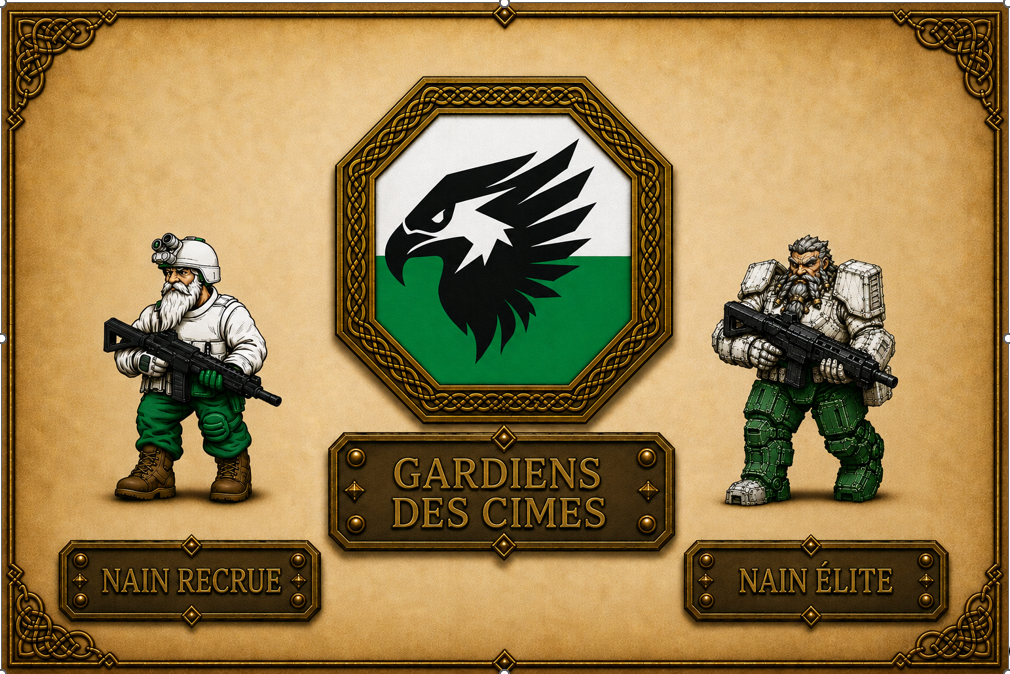 THE UGE ARMY OF DWARF - LES GARDIENS DES CIMES
The first family of dwarf, is the Guardians of the peaks. Born in the highest mountains of the Dwarven realm, the...Read more
-
Gunnar's lore - Chapitre 1 - On a beautifull day
For his 865th birthday, Gunnar sets off with Couenne to enjoy a peaceful day in the heart of the pastures. But...Read more
-
THE HUGE ARMY OF DWARF - Famille HURLEVENT
THE HUGE ARMY OF DWARFS – THE 7 FAMILIES After the Guardians of the Peaks, our journey through the great Dwarf...Read more
-
Gunnar's lore - Chapter 2 - A lesson in life
A LESSON IN LIFE Long before Gunnar became a seasoned warrior, he was just a young dwarf discovering the wonders of...Read more
-
THE HUGER ARMY OF DWARF - Famille Taillepierre
THE TAILLE-PIERRE CLAN Motto: “No Stone Can Resist Us.” Legend has it that their story began when their first ruler,...Read more
Leave a comment